portfolio website templates
Four portfolio templates aimed at people whose work needs explaining, not just displaying.
Trusted by Founders and Entrepreneurs from all over the world








The four portfolio templates
Two developer portfolios with blog and project routes, Sidefolio and DevPro, plus two quieter typographic layouts, Minimal Portfolio and Minimalist Portfolio. Each ships as a Next.js project you clone and edit.
Minimal Portfolio Template
An elegant, feature rich portfolio website template with a minimalistic center design along with tasteful microinteractions.
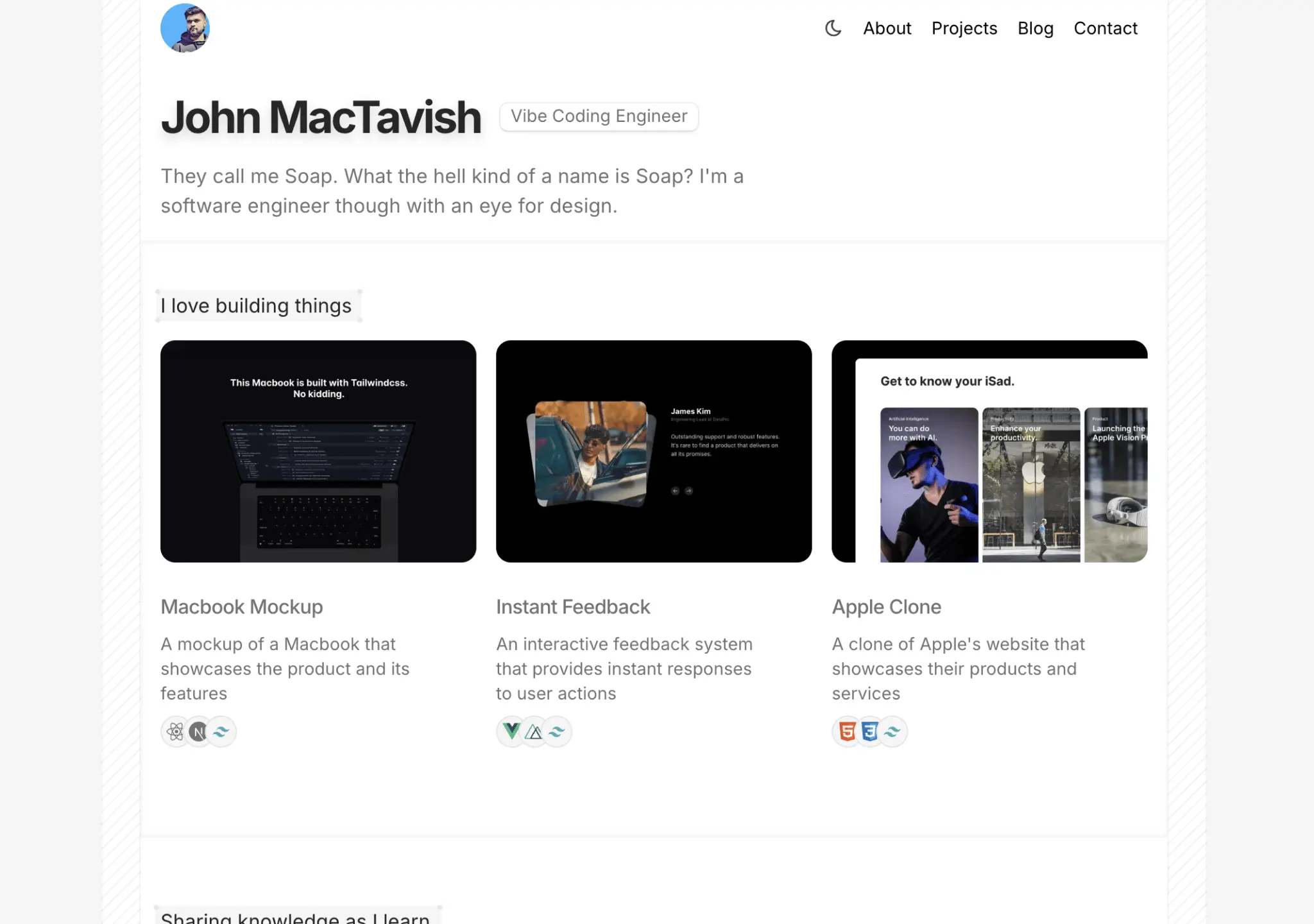
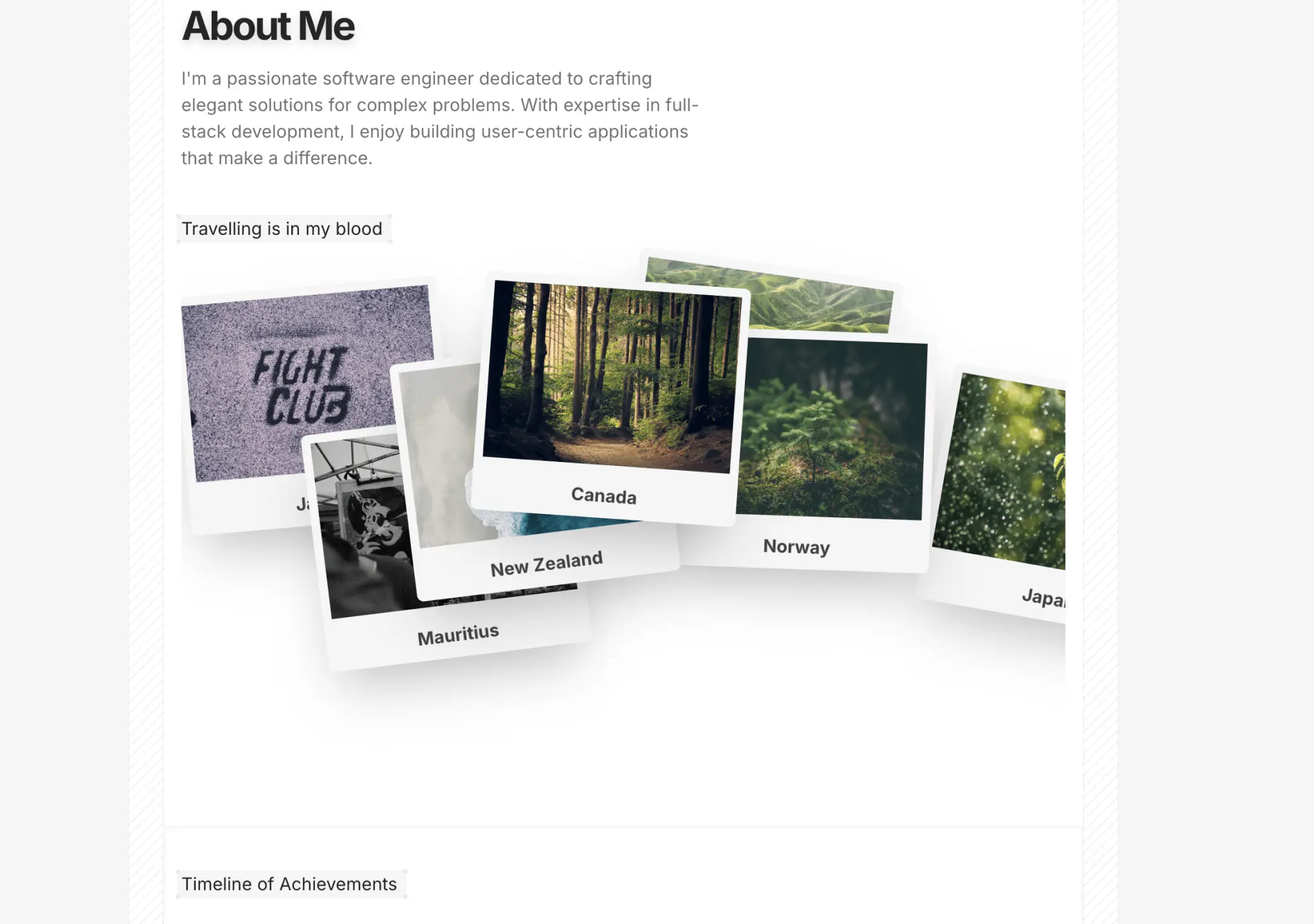
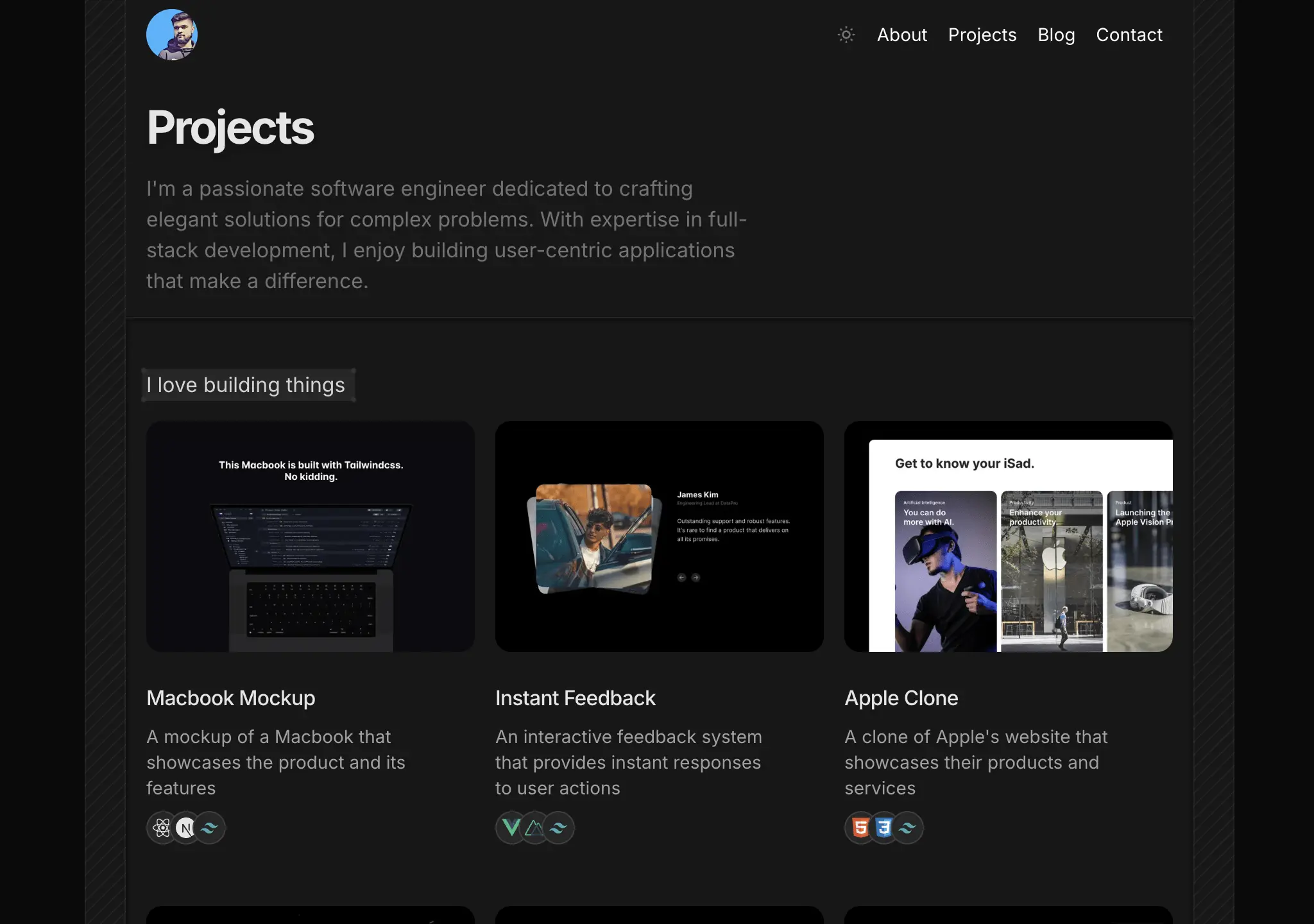
Minimalist Portfolio Template
A minimalist portfolio template with a clean, modern design and a focus on content. Features 5 pages with a simple navigation. Change fonts and colors to your liking.
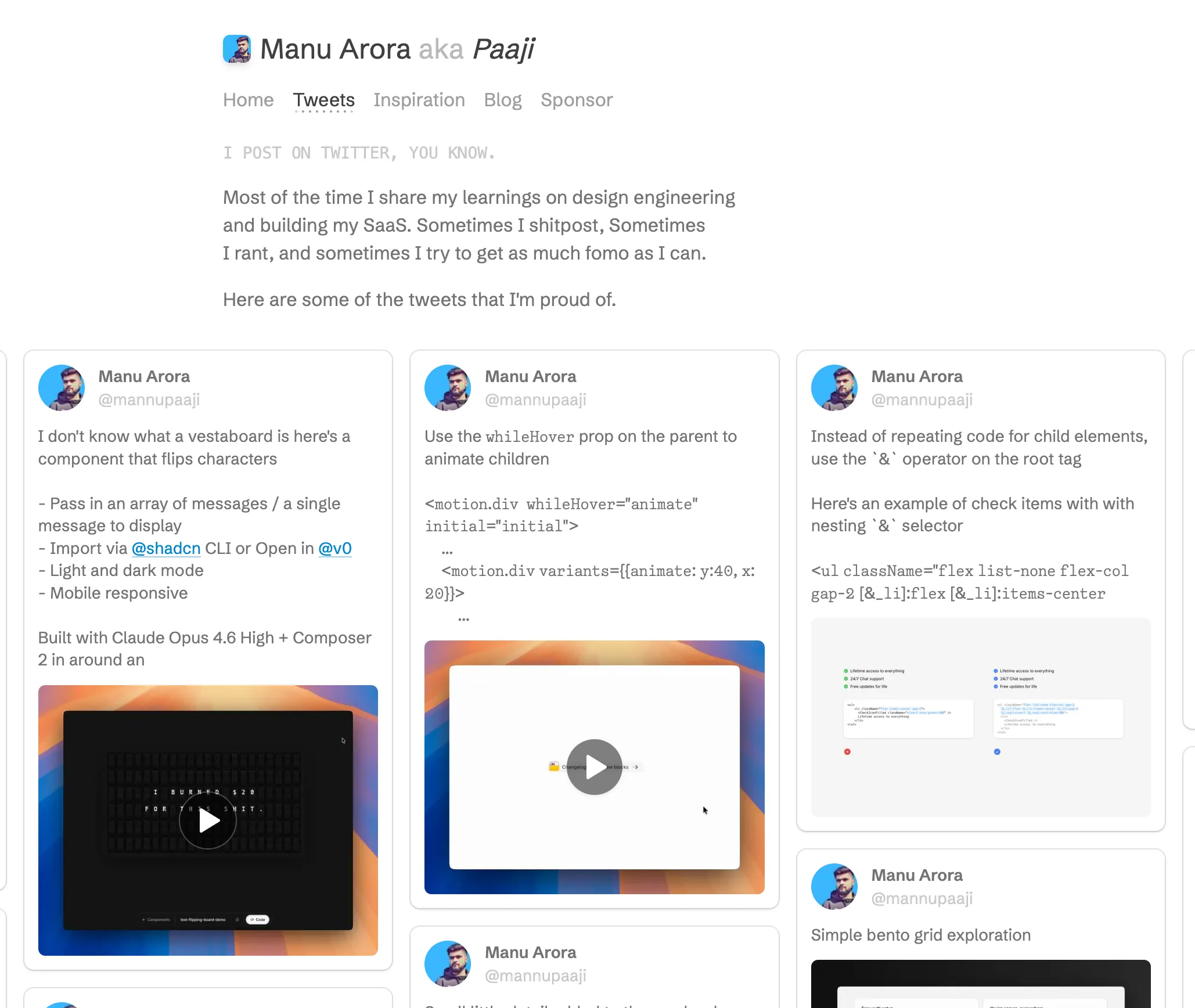
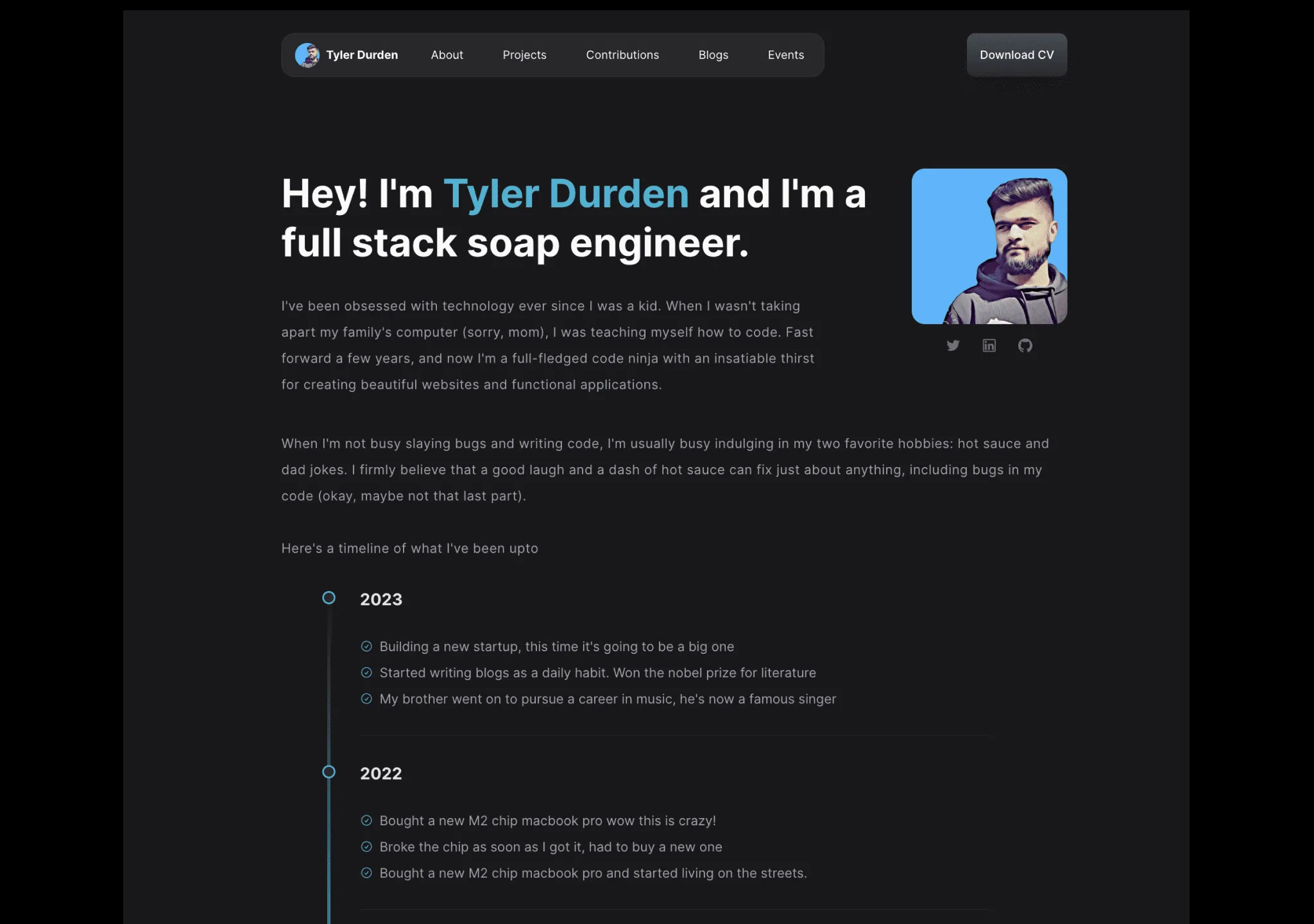
DevPro Portfolio Template
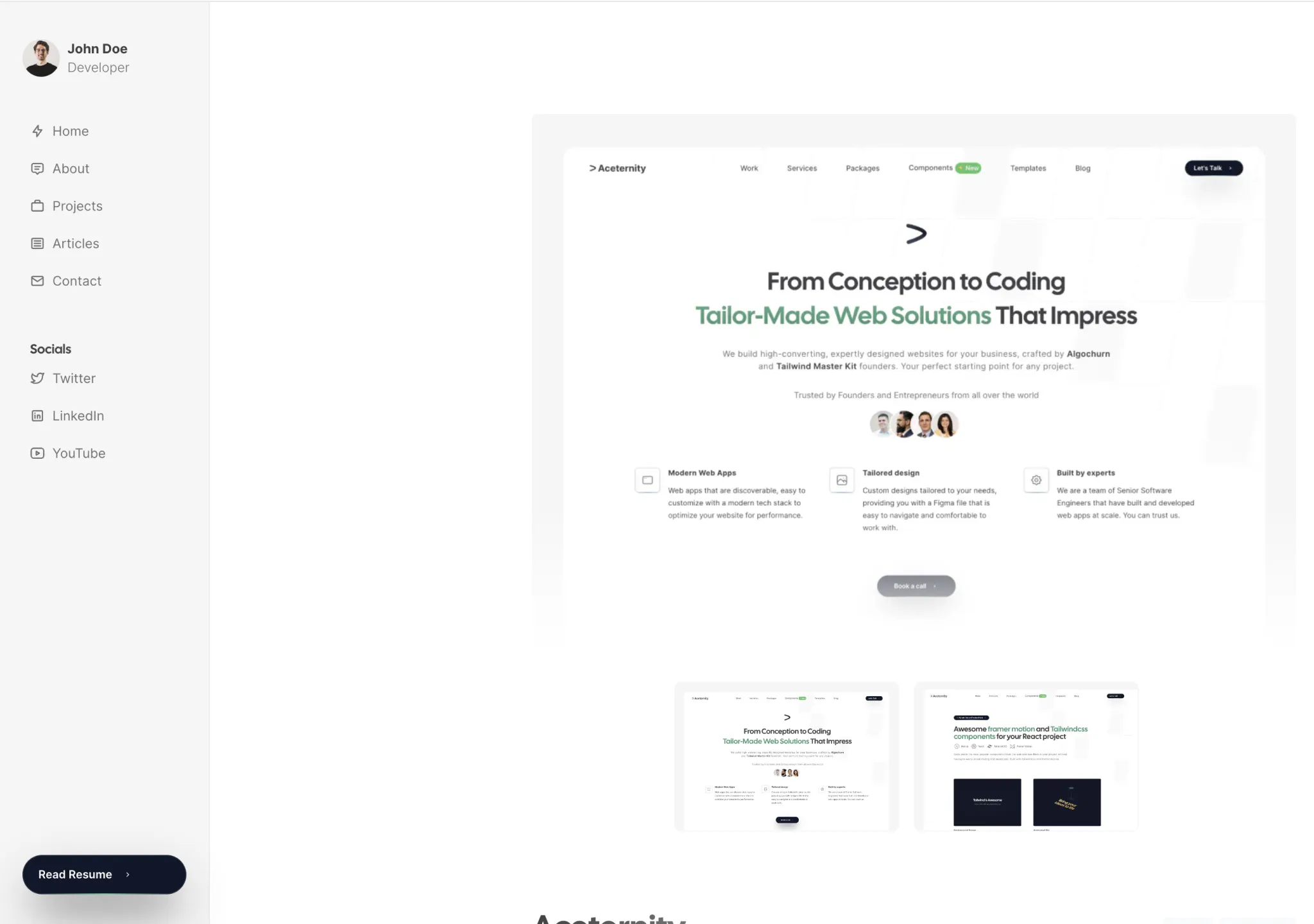
DevPro is a portfolio template for developers with blogs, projects, events and everything. Clean. Modern. Responsive. Neat.




What a portfolio actually has to do
A hiring manager reviewing a stack of applications gives your site somewhere between fifteen and forty seconds before deciding whether to keep reading. In that window they are looking for two things: what you built, and what part of it was yours. Almost every portfolio answers the first and skips the second, which is why so many of them feel interchangeable. The fix is not a better grid. It is a sentence under each project that says what the problem was and what you decided.
This is the argument for case studies over screenshot walls. A screenshot proves a screen existed. A short case study, four or five paragraphs with a before state, the constraint you were working under, the call you made and what happened after, proves you can reason. Three case studies with real detail beat twelve thumbnails every time. Sidefolio and DevPro both give you a per-project route for exactly this, and it is worth writing the long version even if most visitors only read the first paragraph.
Order matters more than people expect. Put your strongest single piece of work first and accept that the rest of the page is downhill, because the alternative, chronological order, buries your best work under whatever you happened to finish most recently. If you are switching disciplines, lead with the work that looks like the job you want and move the older material to a secondary list further down.
Two practical things get portfolios rejected before anyone reads them. The first is a site that takes four seconds to paint because the hero is a 6 MB video of the applicant's desk. The second is a portfolio with no way to contact the person, or a mailto link that opens a mail client nobody uses. Put an email address in plain text in the footer. The minimal templates here are deliberately light on assets so the first paint is quick on a phone on mobile data, which is where a surprising number of these links get opened.
Frequently asked questions
How many projects should a portfolio website show?
Three to five, with a written case study for each. Beyond that the marginal project adds nothing, and a long list makes reviewers assume the work is undifferentiated. If you have more, keep an archive page and link to it.
Which portfolio template is best for a developer?
Sidefolio if you want a persistent sidebar with a resume and blog in the same shell, DevPro if you prefer a conventional top navigation with separate routes for projects, writing and events. Both are Next.js projects with MDX content, so adding a post means adding a file.
Do I need a blog on my portfolio?
Only if you will actually write. An empty blog route or one post from 2022 reads worse than no blog at all. If you do write, two or three pieces about decisions you made on real projects are worth more than a stream of link posts.
Can I use these portfolio templates without knowing Next.js?
You will need to be comfortable running npm install and editing JSX. The content itself lives in MDX and data files, so changing your project list and bio does not require touching component code, but deploying and debugging a build does assume some familiarity.
Keep exploring
- best minimal templates in React and Next.jsFive templates that get their effect from spacing and type rather than colour and motion.
- marketing website templatesSeven landing page templates for products that have something to sell and a number to move.
- React hero section componentsTwenty-two hero layouts you can drop into a Next.js project, from restrained typographic openers to full-bleed backgrounds with animated gradients.
- React testimonial section componentsSeven ways to show social proof, from a four-column masonry grid to infinite marquee rows, a paginated carousel, and cards you can drag around.
Loved by thousands of developers, designers and entrepreneurs
Here's what some of our users have to say about Aceternity UI.

amazing to see @calcom find its way into proper templates 🥳 excited to be powering the next thousands of startups and their demo calls!


Stumbled upon ui.aceternity.com today and my mind is blown 🤯 The seamless integration of framer-motion, tailwind CSS, and shadcn showcases a masterclass in UI design. 🚀 Kudos to @mannupaaji for creating such an innovative and inspirational resource for devs! #UI #nextjs

Have you heard of Aceternity UI? It's packed with various animated components that are ready to copy and paste! Mind-blowing stuff... 🤯 Click here ➡️ ui.aceternity.com #framermotion #nextjs #tailwindcss #techinnovation

ui.aceternity.com So well done. And its bloody free 🤯🤯 Phenomenal work by @mannupaaji


So happy to see @mannupaaji work being recognised 🥹🤌🏻♥️ His work is literally a treasure trove for devs 💎


Aceternity UI has some of the best components for designing landing pages I've ever seen. If you're struggling with figuring out what animations to use. Check it out. Thank me later 😉. ui.aceternity.com


Featured by popular YouTubers
See what the best YouTubers are saying about Aceternity UI.